,
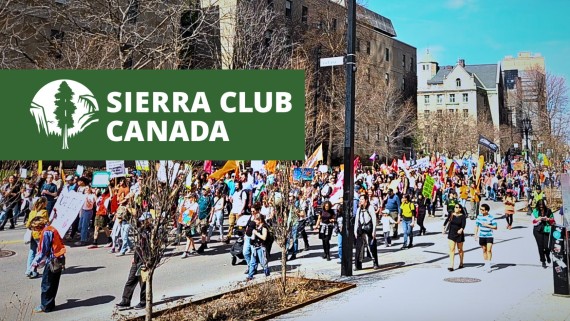
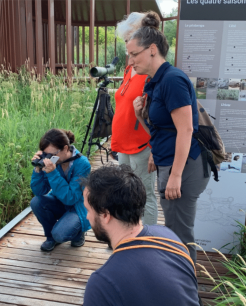
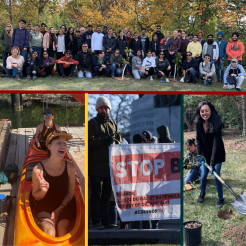
Pictured above is a photo of the PAS UNE COUPE DE PLUS ! / NO MORE CUTS! rally in Montréal last Saturday which saw hundreds of people protest against Federal and Provincial cuts to the environment and public services as well the Federal Government's clear support of destructive oil, gas & LNG expansion. Our Sierra Club Canada Quebec Chapter Director Shirley Barnea helped organize and lead the march, leading chants through a megaphone and guiding the crowd.
Tomorrow is Earth Day and in today's newsletter we have a wealth of resources on nature, biodiversity, and the living climate from British Columbia, to Newfoundland and Labrador, to the international struggle for action for you (en français aussi). Tomorrow you will also get a message asking for a gift to support this work. You can make that gift a day early here, check out a behind the scenes look at how we approach fundraising here, and hear from students at Bur Oak Secondary School about why they ran a fundraiser for us here. You can also meet our team below and the people whose work you'd be supporting.
But first... Here's this week's intro to the newsletter is by Lynn Jones and Ole Hendrickson:
"In honour of Earth Day this year – a positive, hopeful message about our climate. Here it is in a nutshell:
A stable climate on Planet Earth is largely maintained by living beings. Healthy soils, mature forests, diverse plants, animals, fungi and microbes, all work together to cycle water and heat around the planet in ways that support life. If we nurture these lifeforms, they can and will repair the Earth’s climate for us.
There are many ways that living beings maintain a stable climate on Earth. Here are just a few examples:
Plants and trees are natural air conditioners. Using solar energy they pull water from deep soil and release it through their leaves as water vapour, cooling the land surface in the process. In this way they send a lot of the incoming heat from the sun back up into the atmosphere where some of it escapes to outer space. Without the natural air conditioning provided by plants, parking lots and other inert surfaces can get very hot on a sunny day in summer.
Mature forests and plants bring rain and maintain small water cycles. The water vapour sent skyward by forests and wetlands condenses and falls as rain, nurturing life and replenishing soil moisture and aquifers. Large, natural forests suck in moist air from the ocean, effectively watering the interior of continents and regulating Earth’s climate.
Healthy soils hold water in the landscape longer and provide it to growing plants during dry periods, enabling them to grow and transpire water vapour. In doing so, healthy soils reduce both flooding and droughts, and reduce the likelihood of forest fires.
Fungi and fungal networks act like a hidden “sponge and plumbing” system beneath the soil surface. They help soil drink in rain, and store moisture. The stored moisture can then be transpired by plants to cool the local area and contribute to clouds and precipitation locally.
Bacteria, sent skyward from forests, and from the ocean, serve as “cloud condensation nuclei.” They enable clouds to form and rain to fall down and cycle around more locally. When condensation nuclei are in short supply, huge quantities of moisture accumulate in the atmosphere leading to extreme rainfall events and flooding.
Animals such as groundhogs and beavers increase water in the landscape by digging holes for water infiltration and expanding wetlands thereby contributing to water holding, local water cycles and cooling from evapotranspiration. Other animals fertilize the soil with their dung and increase its capacity to hold water."
Read the Lynn & Ole's full message here and check out Ole's page on rabble.ca |